
Articles
/General
Stress vs. Strain: Understanding the Key Differences
Explore the definitions, differences, and relationship between stress and strain, two fundamental concepts in mechanics and materials science.
2 min read
Advertisement
Table of Contents
This article explores the differences between low cycle fatigue and high cycle fatigue, two key concepts in understanding material failure under dynamic loading.
Introduction:
Fatigue is the phenomenon of failure occurring due to dynamic and fluctuating loads. This type of failure has become increasingly prevalent due to the widespread use of complex machinery and structures in various applications like bridges, automobiles, pumps, and turbines. In fact, it’s estimated that fatigue accounts for about 90% of all service failures caused by mechanical issues.
Fatigue failures typically occur after extended periods of repeated stress or strain cycles. Key factors contributing to fatigue failure include:
Fatigue behavior is generally categorized into two main domains: low cycle fatigue and high cycle fatigue.
Here are the key characteristics of low cycle fatigue:
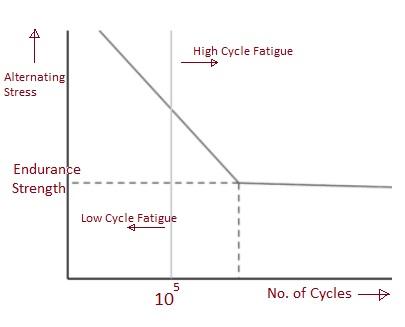
Here are the key characteristics of high cycle fatigue:
In summary, low cycle fatigue involves high loads and plastic deformation, leading to failure in a relatively small number of cycles, while high cycle fatigue involves lower stresses and primarily elastic deformation, leading to failure after a large number of cycles. Understanding the differences between these two types of fatigue is crucial in designing robust and durable mechanical components and structures.
Advertisement
Articles
/General
Explore the definitions, differences, and relationship between stress and strain, two fundamental concepts in mechanics and materials science.
Articles
/Mechanical
This article explores the benefits and drawbacks of hydraulic actuators, highlighting their strengths and weaknesses.
Articles
/Electronics
This article explains how to identify open and shorted zener diodes using resistance and voltage tests with a multimeter.