
Equipments
/Electronics
Logic Analyzer Basics: Features and Vendors
An overview of logic analyzers, their applications, and key specifications, with a focus on Keysight models and other vendors.
2 min read
Advertisement
Table of Contents
Both oscilloscopes and logic analyzers are indispensable tools for troubleshooting electronic circuits, but they serve different purposes and cater to distinct needs. Let’s delve into their individual strengths and how they differ.
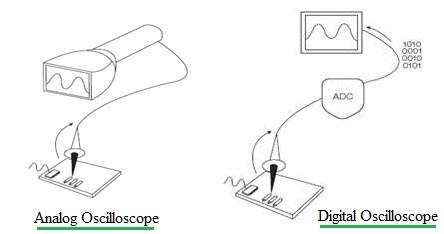
An oscilloscope is primarily used to visualize analog signals. It captures the voltage variations of a signal over time and displays them on a screen. This allows engineers to analyze signal characteristics like amplitude, frequency, and waveform shape. There are two main types of oscilloscopes:
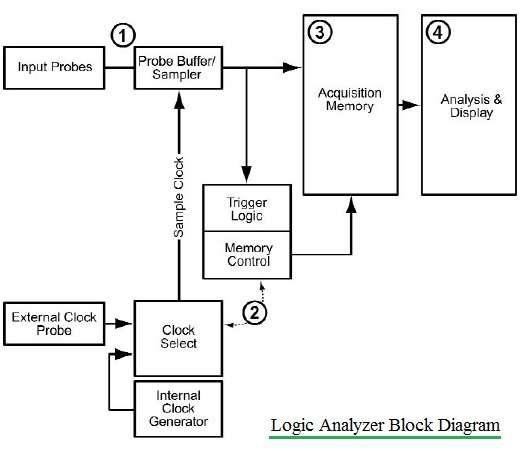
Unlike oscilloscopes, logic analyzers are designed to analyze the data flow within digital systems like microprocessors and microcontrollers. They are particularly useful for examining multiple data buses and understanding how data moves within the system. Logic analyzers help analyze various aspects of embedded hardware and software, by monitoring the states of digital signals (1s and 0s).
A typical logic analyzer workflow involves the following steps:
The following table summarizes the key differences between oscilloscopes and logic analyzers:
| Feature | Oscilloscope | Logic Analyzer |
|---|---|---|
| Input Channels | Fewer (typically up to 4) | More (typically 34 to 136 channels) |
| Signal Type | Measures analog signals | Measures digital signals; detects logic threshold levels. |
| Digital Signal Handling | Doesn’t analyze digital signals in depth; primarily observes voltage levels. | Detects and analyzes two logic levels (high and low). |
| Software Tracing | Does not troubleshoot software execution. | Traces embedded software execution with hardware activities. |
| Probes | Uses single-channel probes. | Uses multi-channel probes to capture multiple signals simultaneously. |
| Analysis Focus | Primarily analyzes hardware. | Analyzes both software and hardware. |
| Signal Type Analysis | Analyzes analog signals. | Analyzes digital signals. |
In essence, an oscilloscope provides a detailed view of analog signals, while a logic analyzer is geared toward examining the flow of digital data within complex systems. Choosing the right tool depends entirely on the specific task at hand and the type of signals you need to analyze.
Advertisement
Equipments
/Electronics
An overview of logic analyzers, their applications, and key specifications, with a focus on Keysight models and other vendors.
Equipments
/Electronics
This article explores the pros and cons of analog and digital oscilloscopes, helping you understand their benefits and limitations.
Equipments
/Electronics
Explore the differences between Digital Storage Oscilloscopes (DSO), Digital Phosphor Oscilloscopes (DPO), and Digital Sampling Oscilloscopes, and their specific applications.