
Measurements
/Electronics
LED Testing: Measurement and Parameters
This article explores the key parameters and testing methods used to evaluate the performance of LEDs, including voltage, current, and light output.
3 min read
Advertisement
Table of Contents
When it comes to dimming LEDs, two popular methods stand out: Pulse Width Modulation (PWM) and Constant Current Reduction (CCR). Both techniques achieve the same goal of reducing light output, but they operate in fundamentally different ways. This guide will delve into the nuances of each method, helping you choose the right approach for your specific application.
Before diving into the specifics of PWM and CCR, it’s crucial to understand the concept of an LED’s rated current. This refers to the specific amount of current required for an LED to reach its maximum light output. Knowing this value is essential when designing and implementing any dimming strategy.
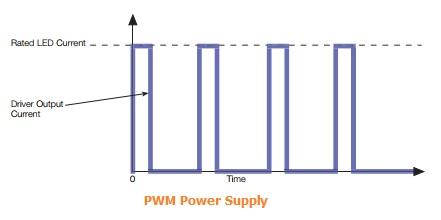
In PWM, the power supply rapidly switches the current to the LED on and off at a high frequency. The current alternates between zero and the LED’s rated current. Think of it like a light switch being flicked on and off very quickly. The LED is either fully on or completely off.
The perceived brightness of the LED is determined by the ratio of “on” time to “off” time. This ratio is called the duty cycle. A higher duty cycle (more time on) results in a brighter light, while a lower duty cycle (more time off) produces a dimmer light.
For instance, in the example depicted above, the LED is ON for 25% of the time and OFF for the remaining 75%. This would result in the LED appearing much dimmer than its full output.
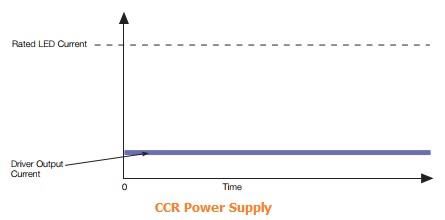
With CCR, the current flowing through the LED is continuously varied to achieve the desired light level. Instead of switching on and off, the current is consistently reduced. The amount of light emitted is directly proportional to the current flowing through the LED.
The brightness of the LED is directly controlled by the amount of current flowing through it. To dim the LED, the current is reduced. As the current decreases, so does the light output. Because of how it works, CCR dimming is sometimes referred to as “analog dimming.”
In the example provided, the dimming has been reduced to a 25% level, achieved by reducing the current to 25% of the LED’s rated current.
| Feature | PWM | CCR |
|---|---|---|
| Current Flow | Switched On/Off at high frequency | Continuously varied |
| Brightness Control | Duty cycle (ratio of on/off time) | Amount of current flowing through LED |
| Dimming Method | Digital | Analog |
Both PWM and CCR have their strengths and weaknesses. The ideal choice depends on the specific requirements of your application.
By understanding these key differences, you can make an informed decision when selecting an LED power supply for your application.
Advertisement
Measurements
/Electronics
This article explores the key parameters and testing methods used to evaluate the performance of LEDs, including voltage, current, and light output.
Equipments
/Electronics
An overview of LED and luminaire test equipment, covering measurements, manufacturers, and key parameters. Essential for ensuring product quality and reliability.
Equipments
/Electronics
Learn about light flicker analyzers used for testing LED and luminaire flickering. Discover how they work and explore a list of leading manufacturers.