
Measurements
/General
Pressure Measuring Devices and Their Ranges
An overview of common pressure measurement devices and their typical pressure ranges, including manometers, Bourdon gauges, and ionization gauges.
2 min read
Advertisement
Table of Contents
This article explores the pros and cons of using manometers, devices that measure pressure by balancing it against the gravitational force of a liquid column. Manometers are versatile tools capable of measuring dynamic and differential pressures, across a wide range from low to high (starting around 0.1 NM/m²). Mercury is a common choice as a manometric fluid because of its broad temperature range (-20°C to +350°C). Ideal manometric fluids should have properties like low viscosity, a low thermal coefficient of expansion, be non-corrosive and non-sticky, have low surface tension, and low vapor pressure.
Here’s a quick overview of common manometer types:
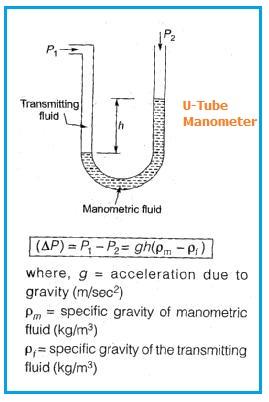
Let’s delve into the benefits of using Manometers:
Following are some of the drawbacks of Manometers:
Advertisement
Measurements
/General
An overview of common pressure measurement devices and their typical pressure ranges, including manometers, Bourdon gauges, and ionization gauges.
Measurements
/Flow
This article explores the benefits and drawbacks of thermal mass flowmeters, detailing their operating principle and key features.
Measurements
/Flow
Explore the working principle, benefits, and limitations of lobed impeller flowmeters for gas measurement, including accuracy, operation, and potential issues.