
Terminology
/General
Flow Meter vs. Flow Transmitter: Key Differences Explained
Understand the differences between flow meters and flow transmitters, their functions, outputs, and use cases in flow measurement systems.
2 min read
Advertisement
Table of Contents
This article explores the various methods and instruments used to measure the flow of materials in a process. The choice of method depends on several factors, including the material’s condition, flow type, volume, range, pressure, temperature, accuracy needs, and required control.
The characteristics of flow are often determined using the Reynolds number, which is a dimensionless quantity that describes whether a flow is laminar or turbulent.
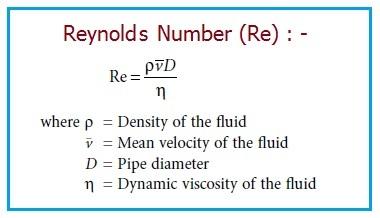
Here’s a breakdown of commonly used flow measurement methods:
The following table outlines various flow measuring instruments and their descriptions:
| Flow Measuring Instrument | Description |
|---|---|
| Venturimeter | Used to measure discharge through a pipe, based on Bernoulli’s principle. It offers high sensitivity and can be used in any position, suitable for water, gases, liquids, and slurries. |
| Orifice meter | Measures volumetric flow rate, also working on Bernoulli’s principle. Different types of orifice plates are used to cater to various applications. |
| Flow Nozzle | Similar to a venturimeter but without a diverging zone. It uses less jet contraction than an orifice meter. |
| Pitot tube | Operates on the principle of transforming the kinetic energy of a liquid into potential energy in the form of static head. It consists of two concentric tubes. |
| Weirs | Commonly used for measuring flow in open channels or streams. Different types exist based on their notches (rectangular, V-type, trapezoidal, etc.). They find use in water works and waste/sewage systems, measuring flow from liters/minute to millions of liters/day. |
| Flumes | Sized to form an inlet and a narrower throat, resembling a venturi. Thus they’re often referred to as venturi-flumes. |
| Rotameter | A constant pressure drop type variable area flowmeter. Fluid flows from bottom to top within the meter. |
| Electromagnetic flowmeter | A non-obstruction type flowmeter, suitable for measuring the flow of slurries and electrically conductive liquids. It uses a non-conducting, non-magnetic pipe surrounded by an electromagnet, which produces a magnetic field. |
| Turbine flowmeter | A volumetric flowmeter. A small turbine wheel is placed inside the pipe, aligned with the fluid flow. |
| Ultrasonic flowmeter | Utilizes ultrasonic transducers or piezo-electric crystals to measure average velocity along the path of emitted ultrasonic waves. Crystals are placed in various arrangements within the tube. |
| Laser Doppler Aneamometer (LDA) | Employs a laser beam, which is focused at the point where flow velocity needs to be measured. |
Advertisement
Terminology
/General
Understand the differences between flow meters and flow transmitters, their functions, outputs, and use cases in flow measurement systems.
Measurements
/General
Explore the fundamental differences between mass flow meters and volume flow meters, their applications, and key characteristics.
Measurements
/Flow
Explore the pros and cons of differential pressure flowmeters, a common technology for measuring fluid flow rates. Learn about their versatility and limitations.