
Articles
/General
Advantages and Disadvantages of Resistance Temperature Detectors (RTDs)
Explore the pros and cons of using Resistance Temperature Detectors (RTDs), covering their stability, accuracy, limitations, and ideal applications.
3 min read
Advertisement
Table of Contents
This article explores the differences between two common temperature sensor types: Resistance Temperature Detectors (RTDs) and Thermocouples. Both are widely used in automation systems for process control. Let’s delve into the specifics of each.
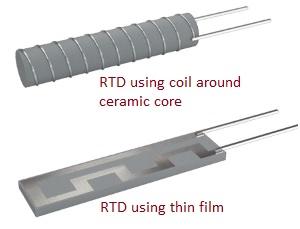
An RTD, or Resistance Temperature Detector, is a sensor whose electrical resistance changes predictably and linearly with temperature. Here’s a breakdown:
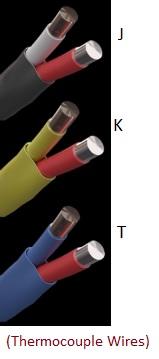
Thermocouples are another common temperature sensor, which operate on a different principle.
Operating Temperature: Thermocouples are known for their wide temperature range, capable of measuring temperatures up to several thousand degrees Celsius.
How it works: They generate a small voltage across the junction of two dissimilar metals when exposed to a temperature difference.
Accuracy: Thermocouples are less accurate than RTDs, with a tolerance of about 2°C, and their readings can drift over time.
Robustness and Response Time: They are not fragile and have a quick response time, usually less than 1 second.
Size: Thermocouples are typically smaller than RTDs, often less than 1.6 mm.
Examples: Common types include J, K, and T thermocouples. J operates from -346 to 2193 °F, K from -454 to 2501°F, and T from -454 to 752 °F.
Important Note: It is not recommended to use standard copper wire to extend thermocouple wires as this will cause inaccurate readings.
Here’s a comparison table summarizing the key differences:
| Specifications | RTD | Thermocouple |
|---|---|---|
| Accuracy | More accurate | Less accurate |
| Temperature range | -200 to 600 °C | -200 to 2000 °C |
| Cost | More | Less |
| Sensitivity | Good (1” typical, other lengths available) | Low (Point sensing only) |
| Response time | 1 to 7 seconds | Less than 0.1 seconds |
| Robustness | Good | Good, subject to drift |
| Reference junction | Not required | Required |
| Long term stability | Excellent | Good, but subject to drift |
| Power Supply | Required | Not required |
| Output type | Resistance, 0.4 Ohm/Ohm/°C, Highly linear | Voltage, 10 to 40 microvolts/°C, Approx. linear |
| Electrical noise resistance | Less Susceptible | More Susceptible |
| Size (Typical) | Medium to small, >0.5 mm | Small to large, <0.5 mm |
| Self heating | Low | No |
| Lead Effect | Medium | High |
| Advantages | • Good stability • Excellent accuracy | • Inexpensive • Fastest response • High temperature operation |
| Disadvantages | • Marginally high cost • Current source required | • Least sensitive • Non-linear • Low voltage • Least stable, repeatable |
For further information, refer to the advantages and disadvantages of RTDs and the advantages and disadvantages of Thermocouples.
Advertisement
Articles
/General
Explore the pros and cons of using Resistance Temperature Detectors (RTDs), covering their stability, accuracy, limitations, and ideal applications.
Measurements
/Temperature
Explore the differences between Pt100 and Pt1000 RTDs, including resistance at 0°C and 100°C, and sensitivity.
Articles
/Measurements
Explore the pros and cons of thermocouples for temperature measurement, including their ruggedness, wide range, and non-linearity.