
Measurements
/Flow
Swirl Flowmeter vs. Vortex Flowmeter: Key Differences
This article compares swirl and vortex flowmeters, highlighting their operating principles, accuracy, and suitability for different applications.
2 min read
Advertisement
Table of Contents
This article explores the pros and cons of using a vortex flowmeter. We’ll delve into how it works and then weigh its benefits against its drawbacks.
A vortex flowmeter operates by placing an obstruction, at a right angle to the fluid flow, inside the pipe. As the fluid passes this obstruction, vortices (swirling patterns) are shed from the sides of the meter’s body. The frequency at which these vortices are shed is directly proportional to the velocity of the fluid.
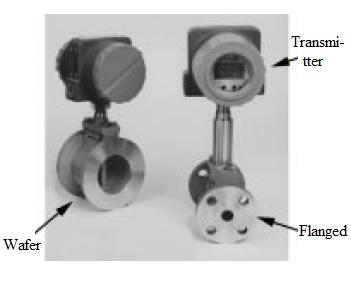
The relationship between the vortex shedding frequency (St) and the fluid velocity (U) is described by the following formula:
St = (f x d) / U
Where:
Vortex flowmeters typically have the following features:
Here’s a look at the benefits of using a vortex flowmeter:
Despite their benefits, vortex flowmeters have some limitations:
Advertisement
Measurements
/Flow
This article compares swirl and vortex flowmeters, highlighting their operating principles, accuracy, and suitability for different applications.
Measurements
/Flow
Explore the benefits and drawbacks of swirl flowmeters, detailing their operating principle, accuracy, and limitations in measuring liquids, gases, and steam.
Measurements
/Flow
Explore the workings, advantages, and disadvantages of variable area flowmeters, mechanical devices for measuring fluid flow rates.