
Measurements
/Flow
Swirl Flowmeter vs. Vortex Flowmeter: Key Differences
This article compares swirl and vortex flowmeters, highlighting their operating principles, accuracy, and suitability for different applications.
3 min read
Advertisement
Table of Contents
This article dives into the differences between two common types of flow meters: vortex flow meters and turbine flow meters. We’ll explore how each works, their features, and advantages.
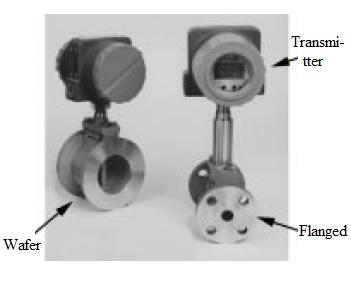
Vortex flow meters utilize a natural phenomenon that occurs when a fluid flows around a “bluff” object. Think of it like a flag flapping in the breeze. As the fluid flows, vortices are shed alternately downstream of the object. The faster the fluid flows, the more frequently these vortices are shed. This “shedding” frequency is directly proportional to the velocity of the fluid. Therefore, a higher shedding frequency indicates a higher flow rate.
A vortex flow meter consists of two main parts: the flow tube and the transmitter. The flow tube itself has three key components: the body, the shedder (the bluff object), and sensors to detect the vortices.
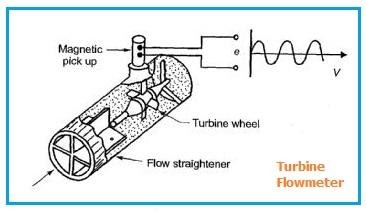
Turbine flow meters use a small turbine wheel placed directly in the path of the fluid flow. They are classified as volumetric flow meters. As the fluid flows, it causes the turbine blades to rotate. Each blade forms part of a magnetic circuit, producing a voltage based on the following equations:
|E| = b m Wr
Where:
The frequency of this generated voltage is proportional to the angular velocity of the blade:
f = (m Wr) / (2 π)
The output voltage takes the form of a sine wave, and the frequency of this wave is directly related to the speed of the turbine, which in turn is related to the fluid flow rate.
In summary, both vortex and turbine flow meters offer effective ways to measure fluid flow, but they operate on different principles and have distinct characteristics. Vortex flow meters are more robust for varying fluid conditions, while turbine flow meters are known for their dynamic response and accuracy in totalized flow measurement. The choice between the two will depend on the specific requirements of your application.
Advertisement
Measurements
/Flow
This article compares swirl and vortex flowmeters, highlighting their operating principles, accuracy, and suitability for different applications.
Measurements
/Flow
Explore the working principle, benefits, and drawbacks of turbine flowmeters used for fluid flow rate measurement.
Measurements
/Flow
Explore the working principle, advantages, and disadvantages of vortex flowmeters. Learn about their accuracy, range, and limitations.