
Terminology
/General
Lux vs Lumens: Understanding the Difference
This article explains the difference between lux and lumens, two key measurements in lighting, and how they relate to light intensity and total light output.
2 min read
Advertisement
Table of Contents
This article delves into the differences between MHCP, MSCP, and MHSCP, three key illumination parameters used when working with lamps or bulbs. Let’s explore these concepts and understand their significance.
When an object is heated beyond room temperature, it begins to radiate energy in the form of electromagnetic waves across various wavelengths. The characteristics of this radiant energy are directly influenced by the object’s temperature. Light, a component of this radiant energy, propagates as wave motion. To better understand illumination, let’s familiarize ourselves with some essential terms.
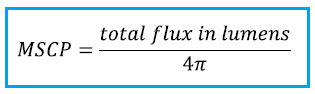
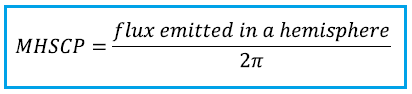
| Parameter | Description | Measurement Area |
|---|---|---|
| MHCP | Average candle power in the horizontal plane. | Horizontal Plane |
| MSCP | Average candle power in all directions (spherical). | Entire Sphere |
| MHSCP | Average candle power within a hemisphere (usually the lower hemisphere). | Single Hemisphere |
Understanding these illumination parameters—MHCP, MSCP, and MHSCP—is crucial for assessing the performance and suitability of light sources in various applications. Each provides a different perspective on light output, enabling informed decision-making when selecting the right lighting solution.
Advertisement
Terminology
/General
This article explains the difference between lux and lumens, two key measurements in lighting, and how they relate to light intensity and total light output.
Terminology
/General
This article explains lux (illuminance), its relationship to lumens and footcandles, and provides recommended light levels for different environments.
Measurements
/Optics
An in-depth comparison of goniophotometers and integrating spheres for light measurement, covering their features, pros, and cons.