
Terminology
/RF
C/I vs C/N: Understanding the Difference
Explore the differences between C/I (Carrier-to-Interference Ratio) and C/N (Carrier-to-Noise Ratio) in RF communication, their measurements, and importance.
2 min read
Advertisement
Table of Contents
This article clarifies the difference between Noise Spectral Density (N₀) and Carrier-to-Noise Spectral Density Ratio (C/N₀). Let’s dive in and explore each concept.
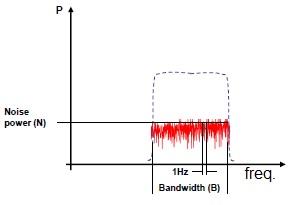
Definition: Noise Spectral Density (N₀) represents the amount of white noise energy present within a 1 Hz bandwidth. Think of it as the fundamental noise “floor” of your system.
Formula: We can express N₀ in a couple of ways:
Units: N₀ is measured in Joules (J), Watts per Hertz (W/Hz), or Watt-seconds (W*s). All of these units essentially represent energy per unit bandwidth.
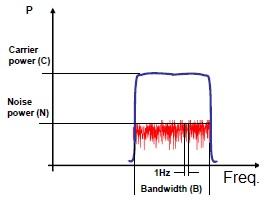
Definition: The Carrier-to-Noise Spectral Density Ratio (C/N₀) is the ratio of the carrier signal’s power to the noise power spectral density. In simpler terms, it tells you how strong your signal is compared to the normalized noise level within a 1 Hz bandwidth.
Relationship to C/N: C/N₀ is similar to the Carrier-to-Noise ratio (C/N), but it differs significantly because C/N doesn’t account for the actual noise bandwidth. C/N₀ normalizes the noise to a 1 Hz bandwidth.
Why use C/N₀? C/N₀ is particularly valuable when dealing with systems where the utilized bandwidth might vary. It offers a consistent measure that allows for easier analysis and comparison across different scenarios.
How to Determine C/N₀ Both C/N and C/N₀ are typically determined using Bit Error Rate (BER) plots or BER meters. These measurements provide crucial insight into the signal quality and system performance.
Advertisement
Terminology
/RF
Explore the differences between C/I (Carrier-to-Interference Ratio) and C/N (Carrier-to-Noise Ratio) in RF communication, their measurements, and importance.
Terminology
/General
A breakdown of common decibel units used in RF and signal processing: dB, dBc, dBd, dBi, dBm, and dBW.
Terminology
/General
This article explains Excess Noise Ratio (ENR), its use in RF amplifier noise measurements, and its relationship to Y-factor, including relevant formulas.