
Measurements
/Fluids
Mechanical vs. Digital Flow Meters: Key Differences
Explore the key differences between mechanical and digital flow meters, including their operating principles, accuracy, and applications.
2 min read
Advertisement
Table of Contents
This article explores the pros and cons of digital flow meters, outlining their benefits and drawbacks compared to traditional mechanical counterparts.
A digital flow meter is a device that measures the flow rate of liquids or gases and displays the results numerically on a digital screen. Unlike mechanical flow meters, which might use a needle or other analog indicator, digital flow meters translate flow data into easy-to-read numbers.
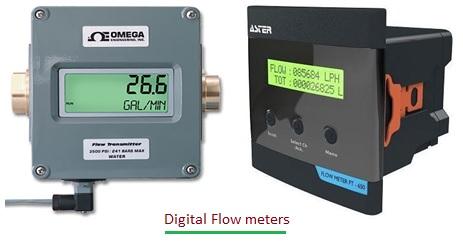 Figure 1: Examples of digital flow meters from OMEGA and ASTER.
These meters capture flow information and present it in a clear, digital format. This contrasts with mechanical meters, which rely on physical movement to indicate flow.
Here are some of the key advantages of using digital flow meters:
Despite their advantages, digital flow meters have some disadvantages:
In conclusion, while digital flow meters offer significant advantages in terms of accuracy, reliability, and ease of reading, their higher cost and dependence on external power should be considered when choosing the right flow measurement solution for a particular application.
Advertisement
Measurements
/Fluids
Explore the key differences between mechanical and digital flow meters, including their operating principles, accuracy, and applications.
Measurements
/Flow
Explore the workings, advantages, and disadvantages of variable area flowmeters, mechanical devices for measuring fluid flow rates.
Measurements
/Flow
Explore the working principle, benefits, and limitations of lobed impeller flowmeters for gas measurement, including accuracy, operation, and potential issues.