
Equipments
/Optics
Spectrophotometer: Advantages and Disadvantages
Explore the pros and cons of single, double, and split beam spectrophotometers. Learn how each type’s design affects its performance and suitability for different applications.
3 min read
Advertisement
Table of Contents
This article explores the differences between colorimeters and spectrophotometers, two instruments frequently used in colorimetry and spectrophotometry. While both are used to analyze light interaction with samples, they do so in different ways and for different purposes.
A colorimeter is an instrument that compares the amount of light passing through an unknown solution to the amount of light passing through a pure solvent. Essentially, it measures how much light is absorbed or transmitted by a sample at specific wavelengths, providing information about the solution’s concentration or thickness.
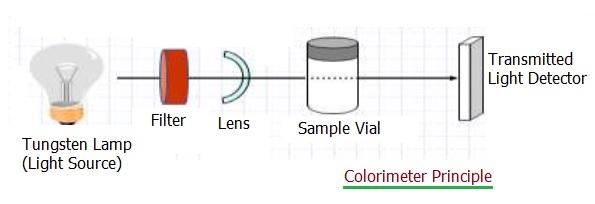
The process generally involves:
A spectrophotometer measures the amount of light absorbed by a sample as a function of wavelength. It analyzes how a sample interacts with light across a wide spectrum, providing detailed information about its spectral properties.
 The process involves:
| Feature | Colorimeter | Spectrophotometer |
|---|---|---|
| Analysis Type | Psychophysical analysis, correlates with human eye-brain perception. | Physical analysis, provides wavelength by wavelength spectral analysis, without direct human interpretation. |
| Data Provided | Tristimulus values (XYZ, L, a, b, etc.) directly read. | Spectral data, which can indirectly calculate psychophysical information. |
| Components | Sensor and data processor. | Sensor plus data processor or computer with application software. |
| Illuminant/Observer | Usually a single illuminant/observer combination (e.g., C/2°). | Multiple illuminant/observer combinations available for calculating tristimulus data and metamerism index. |
| Wavelength Isolation | Isolates broad band of wavelengths using tristimulus absorption filters. | Isolates narrow band of wavelengths using prism, grating, or interference filter. |
| Complexity | Rugged and less complex. | More complex compared to colorimeters. |
| Usage | Routine comparisons of similar colors and adjustment of small color differences under constant conditions. | Color formulation, measurement of metamerism, and variable illuminant/observer conditions. |
| Examples of Instruments | HunterLab D25 series, ColorTrend HT. | HunterLab ColorFlexes, COlorQuests, LabScans, MiniScans, SpectraProbes, UltraScans. |
Both colorimeters and spectrophotometers are valuable tools for analyzing color and light interaction. Colorimeters provide quick and easy measurements for comparing colors under controlled conditions, while spectrophotometers provide detailed spectral information for more complex analysis and color formulation. Choosing between the two depends on the specific application and the level of detail required.
Advertisement
Equipments
/Optics
Explore the pros and cons of single, double, and split beam spectrophotometers. Learn how each type’s design affects its performance and suitability for different applications.
Terminology
/General
Explore the distinct functions and applications of radiometers, spectrometers, and spectroradiometers in light measurement.
Equipments
/Electronics
An overview of spectrophotometers and spectrometers, their applications, key features, and vendors.