
Articles
/Healthcare
Nebulizer: Advantages and Disadvantages
A concise overview of nebulizer benefits and drawbacks, including ease of use, cost, portability, and potential risks.
3 min read
Advertisement
Table of Contents
This article compares nebulizers and metered dose inhalers (MDIs), highlighting their differences, advantages and disadvantages. Both are medical devices designed to deliver medication directly to the lungs, offering effective and quick relief for asthma patients and those with breathing difficulties.
A nebulizer transforms liquid medicine into a fine mist, which the patient inhales directly into their lungs. This mist is breathed in through a facemask or mouthpiece. Nebulizers are typically electric or battery-operated.
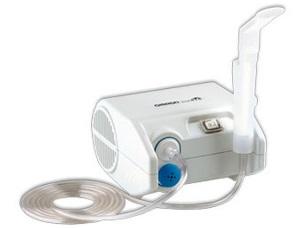 Image: Omron Nebulizer
Using a nebulizer takes a bit more time (approximately 5-10 minutes) to deliver the medication. It’s generally easy to administer medication to children, although some may be resistant and cry.
Following are some of the benefits of nebulizers.
Following are some of the drawbacks of nebulizers.
Inhalers are handheld and portable devices. The two main types are Metered Dose Inhalers (MDIs) and Dry Powder Inhalers.
 Image: MDI Inhaler
MDIs release a pre-measured spray of medication when the user presses the canister. They deliver a consistent dose with each actuation. MDIs need to be replaced after a certain number of doses. Dry Powder Inhalers, on the other hand, deliver the medication in powder form, without using a propellant.
Following are some of the benefits of MDI Inhalers.
Following are some of the drawbacks of MDI Inhalers.
| Feature | Nebulizer | MDI Inhaler |
|---|---|---|
| Working Principle | Converts liquid medication into a fine mist for inhalation | Delivers a fixed dose of aerosolized medication with each spray |
| Delivery Method | Requires a mask or mouthpiece for continuous inhalation | Requires hand breath coordination for inhalation |
| Portability | Bulky and requires a power source (electric or battery-operated) | Small, lightweight, and highly portable |
| Ease of Use | Suitable for infants, elderly, and patients with severe breathing difficulty | Requires technique and coordination for effective use |
| Time Required | Takes 5–10 minutes per dose | Takes a few seconds per dose |
| Medication Waste | More medication may be lost as mist disperses | Delivers precise medication dosage with minimal waste |
| Common Usage | Used for severe respiratory conditions, chronic diseases, and hospital settings | Preferred for daily asthma and COPD management |
| Cost | Generally more expensive due to equipment and maintenance | More affordable and cost-effective for regular use |
Both Nebulizers and MDI inhalers are effective drug delivery devices for respiratory conditions like asthma, COPD and other lung diseases. Nebulizers are better suited for young children, elderly and critically ill patients due to their ease of use and continuous medication delivery. MDI inhalers, on the other hand, are more portable, cost effective and faster, making them ideal for daily self management of respiratory conditions. The choice between the two depends on the patient’s age, condition severity and convenience needs.
Advertisement
Articles
/Healthcare
A concise overview of nebulizer benefits and drawbacks, including ease of use, cost, portability, and potential risks.
Articles
/Medical
Explore the benefits and drawbacks of Metered Dose Inhalers (MDIs), a common device used in asthma treatment. Learn about their advantages and limitations.
Terminology
/Medical
Explore the differences between peak flow meters and spirometers, their measurements, cost, and applications in respiratory health assessment.