
Equipments
/Electronics
Noise Dosimetry: Understanding Noise Pollution and Measurement
An overview of noise pollution, noise dosimeters, noise dosimetry, and prominent vendors in the field, exploring measurement equipment and control techniques.
4 min read
Advertisement
Table of Contents
The meter used to measure sound noise level is known as a sound meter or sound level meter. This article covers the basics and types of sound level meters, their benefits and manufacturers.
Definition: As we know, sound level measurement is very useful in the field of acoustics. The meter used for quantification of different types of noise is known as a sound level meter. It’s widely used in industrial, environmental, and aircraft settings.
It’s important to note that a sound meter doesn’t perceive human loudness level. Just the level of sound isn’t enough; frequency is also equally important. Hence, better response over a wide frequency range is considered more accurate in a sound meter.
Following are the different types of sound level meters (SLMs):
Integrating meter: This type is used to measure sound level in Leq (Equivalent Continuous Sound Level). It is often employed in occupational and environmental noise level monitoring.
Non-integrating meter: This meter is used to display instantaneous noise level at one moment in time. It’s suitable for spot-checking and for steady sound level monitoring.
Both class-1 and class-2 SLMs adhere to the IEC standard. Both have the same functions but they have different tolerance errors.
There are three types of SLMs as per ANSI standard:
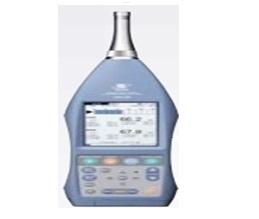
In order to select the right SLM, one needs to decide based on the respective application of use. There are two main categories of SLMs viz. general purpose and special. General-purpose SLMs are used when it is desired to measure noise emitted from various sources such as a water pump. Here, Type-2 with frequency weighting-A option is chosen.
Special applications include occupational, industrial & environmental, community, and research. For these types of applications, SLMs of type-1 or type-2 with A/C frequency weighting along with Leq measurement are used.
Here are some manufacturers of sound level meters:
| Manufacturer | Model | Features |
|---|---|---|
| HTC Instruments | SL-1350 and SL-1352 | IEC61672-1 class-2, ANSI S1.4 Type-2 |
| Cirrus | Optimus CR-17x Series | IEC61672-1 class-1, ANSI S1.4 Type-2 |
| AMPROBE | SM-20A | IEC651 Type-2, ANSI 1.4 Type-2 |
| B&K Precision | 735 | IEC 651 Type-2 |
| Lutron | SL-4033SD | IEC 61672 Class-1 |
| TES | TES-1150, TES11561 | IEC 61672-1 class-2, ANSI S1.4 Type-2 |
| RION Co. Ltd., Japan | NA-28 series | Measurement and display of 1/1 and 1/3 octave, function as meter and analyzer both using switch button, simple PC interface |
A Sound Level Meter (SLM) is an essential device used to measure sound pressure levels in various environments. Following are some of the advantages of sound level meter.
Sound Level Meters are indispensable tools for measuring and managing noise levels in a variety of applications. By enabling precise noise assessment and control, they contribute to safer and more comfortable environments.
Advertisement
Equipments
/Electronics
An overview of noise pollution, noise dosimeters, noise dosimetry, and prominent vendors in the field, exploring measurement equipment and control techniques.
Terminology
/Sound
A comparison of Leq (equivalent continuous sound level) and TWA (time-weighted average), two key sound level measurements.
Measurements
/Sound
Explore the differences between A, C, and Z weighting in sound level meters and their importance in accurately measuring sound levels.