
Measurements
/Flow
Vortex vs. Turbine Flow Meters: A Detailed Comparison
A detailed comparison of vortex and turbine flow meters, exploring their operating principles, features, and advantages for flow measurement.
2 min read
Advertisement
Table of Contents
Turbine flowmeters are devices used to measure the flow rate of fluids. They work by placing a small turbine wheel within a pipe, directly in the path of the flowing fluid. As the fluid moves, it causes the turbine to rotate. This rotation is then used to determine the flow rate. Let’s delve into the specifics of how they work, along with their benefits and drawbacks.
At the heart of a turbine flowmeter is a turbine wheel with a permanent magnet embedded inside. This magnet is polarized at a 90-degree angle to the axis of rotation. As the fluid flows and the turbine spins, each blade forms a magnetic circuit with the magnet and a coil. This interaction generates a sinusoidal output voltage, with its frequency directly proportional to the angular velocity of the turbine blade. This frequency is what we use to measure the flow.
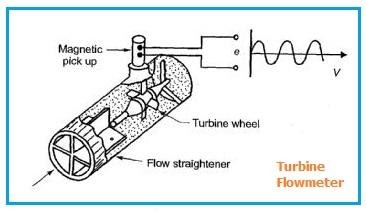
Here are some of the key benefits of using turbine flowmeters:
Despite their advantages, turbine flowmeters also come with some drawbacks:
Advertisement
Measurements
/Flow
A detailed comparison of vortex and turbine flow meters, exploring their operating principles, features, and advantages for flow measurement.
Measurements
/Flow
Explore the working principle, benefits, and limitations of lobed impeller flowmeters for gas measurement, including accuracy, operation, and potential issues.
Measurements
/Flow
This article compares swirl and vortex flowmeters, highlighting their operating principles, accuracy, and suitability for different applications.