
Terminology
/General
Primary vs. Secondary Transducers: A Detailed Explanation
Understand the difference between primary and secondary transducers in measurement systems, their roles, and examples.
2 min read
Advertisement
Table of Contents
It’s easy to get confused between the terms “sensor” and “transducer,” as they often work together. Let’s break down the differences to clear up any confusion.
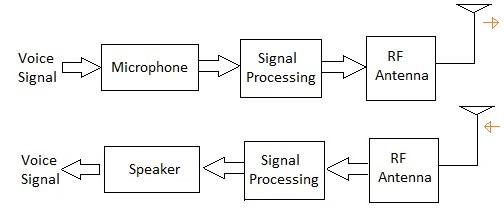
Essentially, a transducer is a device that converts energy from one form to another. Think of it as a translator between different types of energy.
Examples of Transducers:
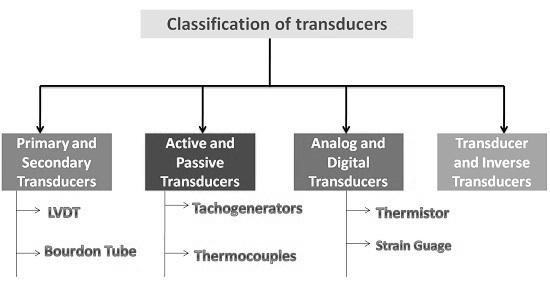
Transducers can be categorized in various ways:
A sensor, on the other hand, is a device that senses a physical quantity and converts it into an analog electrical form. This electrical form can then be measured by an instrument or user. The output can manifest as changes in capacitance, voltage, inductance, resistance, etc., depending on the application.
A key thing to remember is that a sensor can often be a part of a larger transducer, particularly at the initial stage of the energy conversion process.
The relationship:
Physical Parameter -> | Sensor | -> Electrical Output
Consider a microphone:
Think of it this way: the microphone is a complete unit that takes in sound and gives out electricity (transducer), but its first step in doing so is sensing those sound waves (sensor).
While a microphone is a good example of a transducer that incorporates a sensor, many other sensors don’t fit that mold. Here are a few:
In essence, a sensor is about the sensing of a physical quantity, while a transducer is focused on the conversion of energy from one form to another. They are closely related, and often work together, but have distinct roles in the world of measurement and control.
Advertisement
Terminology
/General
Understand the difference between primary and secondary transducers in measurement systems, their roles, and examples.
Terminology
/General
Explore the fundamental differences between active and passive transducers, including their power requirements, output signals, and examples.
Terminology
/General
Explore the fundamental differences between active and passive sensors, including their working principles, applications, and advantages.